Afghan girls deplore Taliban’s new order to cover faces in public | Taliban Information
Warning: Undefined variable $post_id in /home/webpages/lima-city/booktips/wordpress_de-2022-03-17-33f52d/wp-content/themes/fast-press/single.php on line 26
2022-05-10 05:21:17
#Afghan #women #deplore #Talibans #order #cowl #faces #public #Taliban #Information
The Taliban has issued one more decree imposing additional restrictions on Afghan women, and criminalising their clothing.
While the Taliban have at all times imposed restrictions to govern the our bodies of Afghan girls, the decree is the first for this regime where criminal punishment is assigned for violation of the gown code for ladies.
The Taliban’s not too long ago reinstated Ministry for the Propagation of Virtue and Prevention of Vice introduced on Saturday that it's “required for all respectable Afghan girls to put on a hijab”, or headscarf.
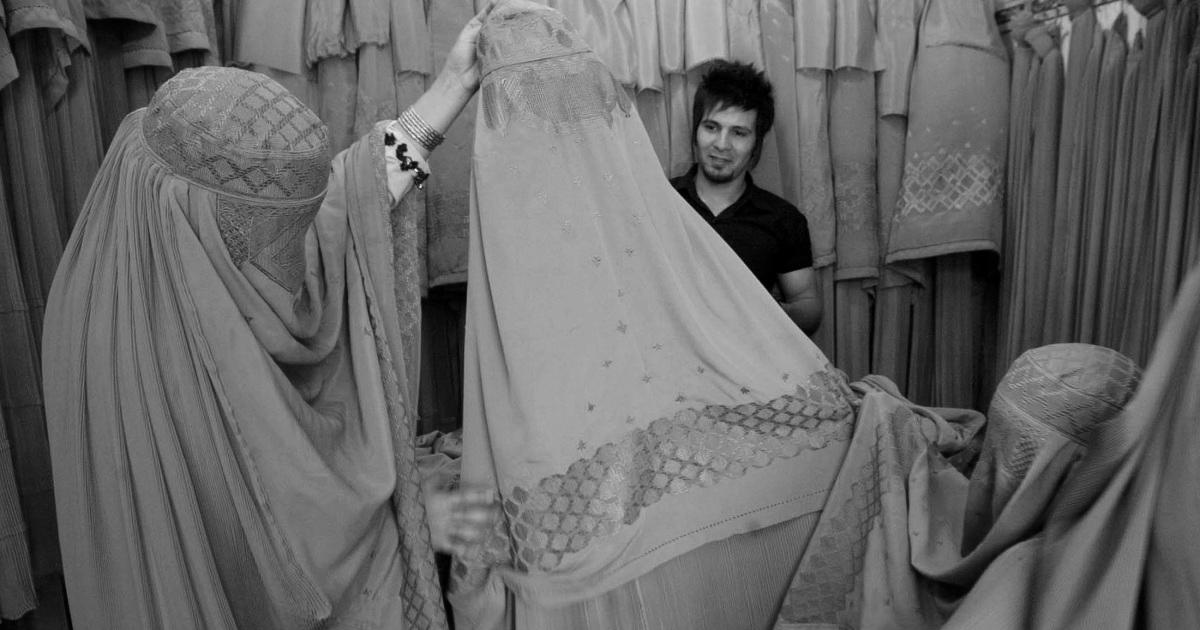
The ministry, in an announcement, identified the chadori (the blue-coloured Afghan burqa or full-body veil) as the “greatest hijab” of choice.
Also acceptable as a hijab, the assertion declared, is a protracted black veil overlaying a woman from head to toe.
The ministry assertion supplied an outline: “Any garment masking the body of a woman is taken into account a hijab, offered that it's not too tight to represent the body parts neither is it skinny enough to reveal the physique.”
Punishment was also detailed: Male guardians of offending girls will receive a warning, and for repeated offences they will be imprisoned.
“If a woman is caught without a hijab, her mahram (a male guardian) will be warned. The second time, the guardian will likely be summoned [by Taliban officials], and after repeated summons, her guardian shall be imprisoned for 3 days,” in accordance with the assertion.
Akif Muhajir, a spokesman for the ministry, mentioned that authorities workers who violate the hijab rule might be fired.
And male guardians found guilty of repeated offences “will be despatched to the courtroom for additional punishment”, he said.
A girl sits with Afghan ladies ready to obtain bread in Kabul, Afghanistan in January 2022 [File photo: Ali Khara/Reuters] (Reuters)‘Third-class citizens’The brand new decree is the most recent in a sequence of edicts limiting women’s freedoms imposed since the Taliban seized power in Afghanistan final summer. Information of the decree was received with widespread condemnation and outrage by Afghan women and activists.
“Why have they lowered women to [an] object that's being sexualised?” requested Marzia, a 50-year-old college professor from Kabul.
The professor’s identify has been changed to guard her identity, as she fears Taliban repercussions for expressing her views publicly.
“I am a practising Muslim and value what Islam has taught me. If, as Muslim men, they've an issue with my hijab, then they need to observe their very own hijab and lower their gaze,” she said.
“Why should we be treated like third-class citizens as a result of they can not apply Islam and management their sexual wishes?” the professor asked, anger evident in her voice.
As an single lady who takes care of her mother, Marzia does not have a mahram. She is the only real breadwinner in her small household.
“I am single, and my father died very way back, and I take care of my mother,” she stated.
“The Taliban killed my brother, my only mahram, in an assault 18 years in the past. Would they now have me borrow a mahram for them [to] punish me next time?” she asked.
Marzia has repeatedly been stopped by the Taliban while travelling on her own to work in her university, which is a violation of an earlier edict that forbids women from travelling alone.
“They regularly stop the taxi I'm in, asking where my mahram is,” Marzia stated.
“When I try to explain I don’t have one, they gained’t pay attention. It doesn’t matter that I am a revered professor; they present no dignity and order the taxi drivers to desert me on the roads,” she stated.
“I have had to stroll several kilometres to house or my courses on a couple of occasion.”
‘Dignity and company’Marzia’s sentiments had been echoed by women’s rights activists based mostly in Afghanistan and outside the nation.
Activist Huda Khamosh was a leader within the women-led demonstrations in Kabul that took place after the Taliban takeover last summer. She evaded arrest during a Taliban crackdown on female protestors in February. Later, Khamosh confronted Taliban leaders at a conference in Norway, demanding that they release her fellow female protestors held in Kabul.
“The Taliban regime was imposed on us, and their self-imposed guidelines don't have any authorized basis, and ship a mistaken message to the younger girls of this technology in Afghanistan, lowering their id to their clothes,” said Khamosh, who urged Afghan women to lift their voices.
“By no means be silent,” she said.
“The rights granted to a woman [in Islam] are more than just the correct to decide on one’s husband and get married,” Khamosh stated, referring to a Taliban decree on rights that targeted only on the appropriate to marriage, however didn't deal with issues of work and education for women.
“Girls have dignity and agency over their lives,” she said.
“Twenty years [of gains made by Afghan women] is just not insignificant progress to lose in a single day. We won this on our personal may, combating the patriarchal society, and nobody can remove us from the group.”
The activists also mentioned they'd predicted the current developments in Afghanistan, and positioned equal blame on the worldwide community for not recognising the urgency of the scenario.
Samira Hamidi, an Afghan activist and senior researcher at Amnesty International, said that even after the Taliban’s take over last August, Afghan women continued to insist that the international community maintain women’s rights as “a non-negotiable element of their engagement and negotiations with the Taliban”.
But the international neighborhood had failed Afghan girls but once more, Hamidi stated.
“For a decade Afghan ladies have been warning all actors concerned in peace negotiations about what returning the Taliban to power will means to women,” she said.
The present state of affairs has resulted from flawed policies and the international group’s lack of “understanding on how serious girls’s rights violations” are in Afghanistan, she stated.
“It is a blatant violation of the proper to freedom of alternative and movement, and the Taliban got the space and time [by the international community] to impose extra reprisals and systematic discrimination,” Hamidi mentioned.
Khamosh, the activist, agrees.
“The world is betraying an entire era with their silence,” she stated.
“It's a crime in opposition to humanity to allow a country to show into a prison for half its population,” she stated, including that repercussions from the ongoing situation in Afghanistan will be felt globally.
Marzia, the professor, shared the same sense of disappointment.
“We are a country that has produced among the most good ladies leaders. I used to teach my college students the value of respecting and supporting ladies,” she stated.
“I gave hope to so many young women and all of that has been thrown in [the] trash as meaningless,” she mentioned.
“My heart breaks into pieces with every new ‘law’ and decrees they challenge that contradicts our Islamic and Afghan values.”
Quelle: www.aljazeera.com